 © André Wirsig
April 7, 2026
SECAI Fellows and PhD Students Gather for Annual Off-Site Meeting
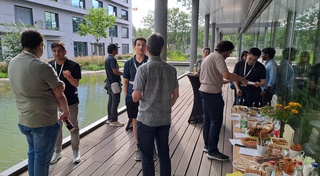
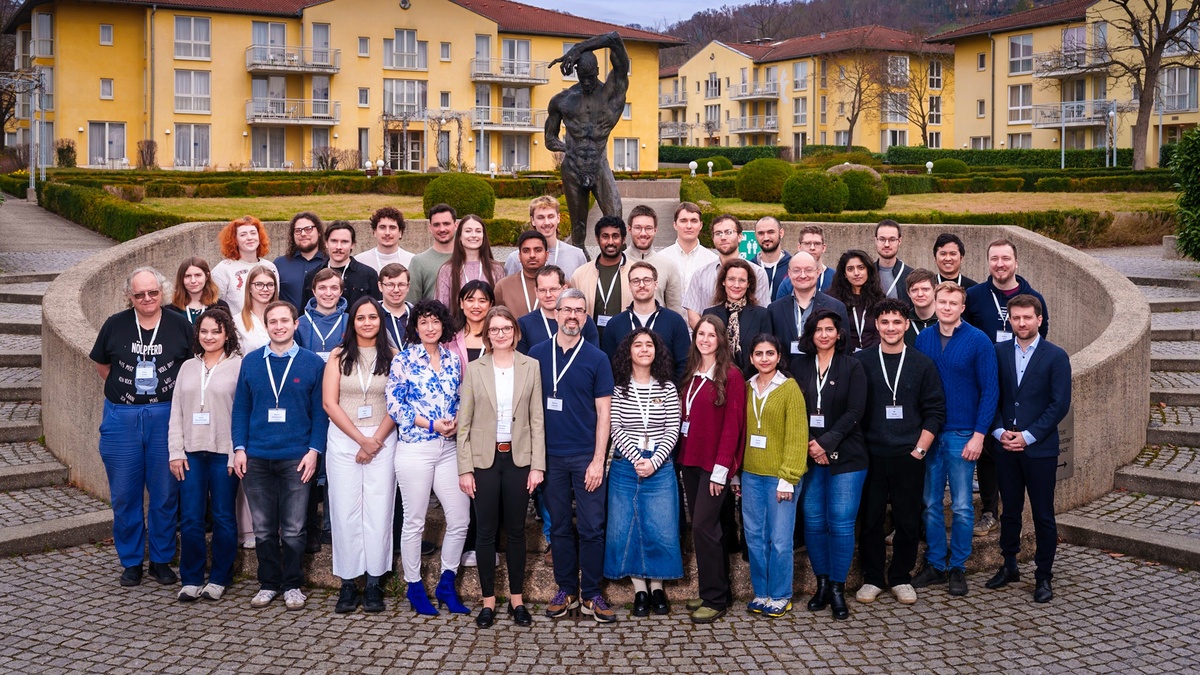
From March 23 to 25, the SECAI Graduate School and SECAI Fellows gathered in Radebeul for the SECAI Off-Site Meeting, where they exchanged ideas, shared research updates, and strengthened connections. The program featured keynotes by Ivo F. Sbalzarini and Jakob Nikolas Kather, an introduction to the basic principles of the SpiNNaker 2 platform, and soft skills workshops, preparing participants for future research, collaboration, and and successful career paths in academia and industry
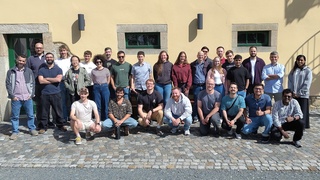
The event brought together 45 PhD students and SECAI Fellows and is held annually to foster connections within the research school and keep participants informed about current developments. Given the wide range of research topics of the researchers, regular exchange is particularly valuable. With its strong interdisciplinary focus, the School's meeting serves as a platform for sharing insights and encouraging new collaborations.
The program featured interactive session formats: A “speed-dating” in small groups enabled participants to present and discuss their individual research projects, fostering exchange across disciplines. During a creative brainstorming session, attendees developed ideas for presenting SECAI at fairs and events, focusing on communicating the diversity of research and making AI more accessible to a broader audience.
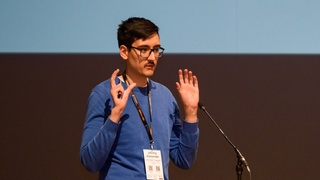
Two keynote lectures gave updates on current developments. In his talk, Ivo F. Sbalzarini discussed how machine learning can help to unlock the mechanisms of living systems. He highlighted how machine learning methods can be developed to become valid, reproducible, and interpretable tools in data-driven science, which is particularly important in the life sciences where predictive theories of living systems are often lacking. Jakob Nikolas Kather gave a presentation on AI in cancer research and oncology, providing an overview of current developments and introducing key areas of research in his field.
The program also included a hands-on tutorial on getting started with the SpiNNaker platform, providing practical insights into neuromorphic computing. Additionally, a workshop on project management and leadership for early-career researchers provided guidance on structuring projects, understanding team dynamics, and developing leadership skills. Social activities, including a game night and a visit to the Hoflößnitz winegrowing museum, complemented the academic program and further strengthened networking among participants.
News All News
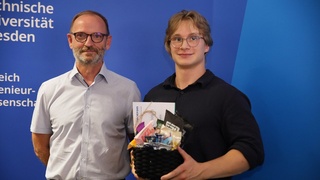 © Ludwig Schmutzler