September 17, 2026
Touch Sensing and Processing Summer School Returns to Saxon Switzerland for Third Edition
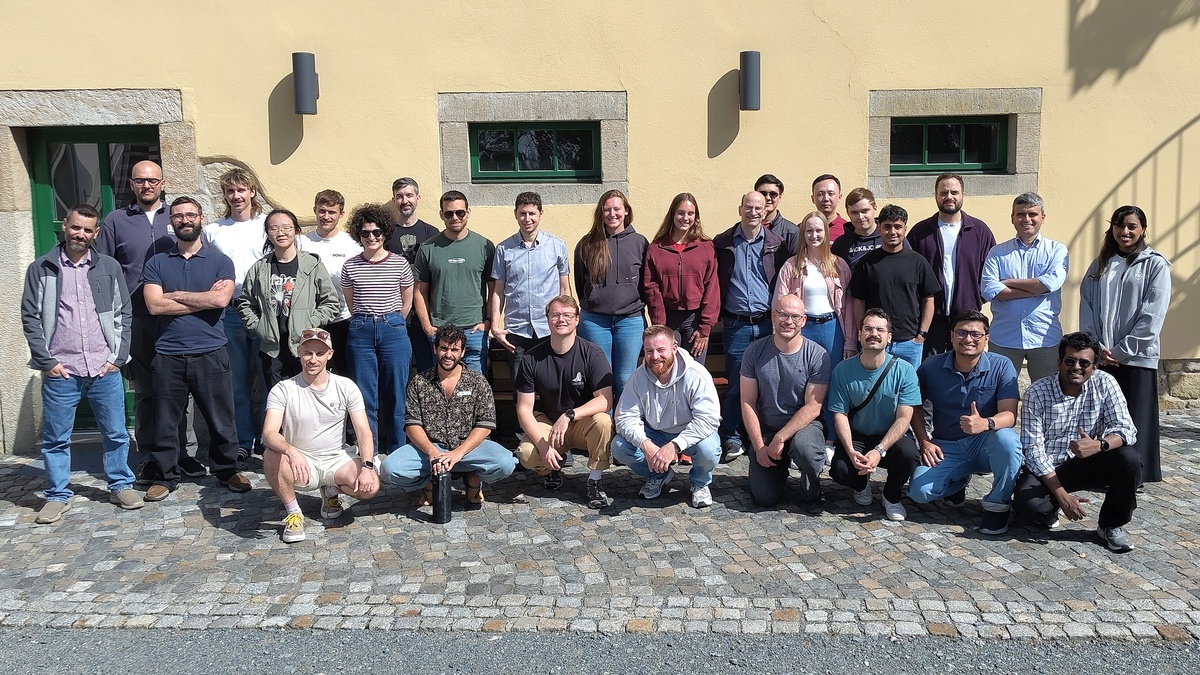
This August, the „Touch Sensing and Processing Summer School“ (TSPSS) took place for the third time, once again bringing together the international touch research community near Dresden. Over five days, 26 participants from 16 nations gathered in Saxon Switzerland to exchange ideas on tactile sensing and processing in robotics. Supported by SECAI since the first year, Fellow Roberto Calandra has established the summer school as a yearly for early-career researchers and leading experts alike who share an interest in giving machines a sense of touch.
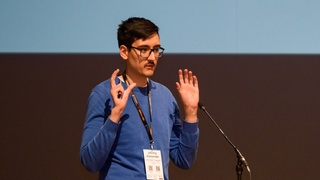
Tactile sensors are widely regarded as a key technology for the next breakthrough in robotic manipulation: while computers already outperform humans on many cognitively demanding tasks, they still struggle with the kind of dexterous, physical interaction that comes naturally to us. Pure image data is not enough to capture properties like surface structure, weight, or hardness, which is why the field of tactile sensing continues to grow, even if research in this area is still comparatively modest in scale relative to its importance. This year's scientific program opened with Calogero Maria Oddo (Scuola Superiore Sant’Anna), who spoke about touch science and engineering in biorobotics and bionics and stressed how progress in the field depends on a close interplay between science and engineering.
Aviv Tamar (Technion) followed with a talk on reinforcement learning under partial observability and artificial palpation, drawing a connection to applications in breast cancer detection. Later in the week, Robert Haschke (Bielefeld University) presented his work on piezoresistive and barometric tactile sensors and their use in tactile servoing and vibration-based slip detection, while Edward Adelson (MIT) discussed vision-based tactile sensors, comparing parallel-jaw grippers and humanoid hands and outlining what the future might hold for robotic fingertips. Lorenzo Jamone (University College London) spoke about the intelligence of the hand and how touch can be leveraged across a range of robotic tasks, and Avishai Sintov (Tel Aviv University) closed the lecture series with a talk on manipulation with compliant hands, including the handling of deformable linear objects and robot-to-human handovers. A hands-on session with the DIGIT tactile sensor gave participants the chance to put some of these concepts into practice themselves.
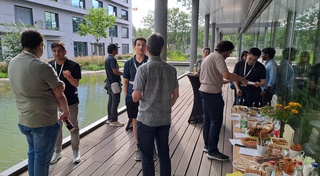
Beyond the lecture hall, the summer school once again made space for informal exchange. A hike along the first leg of the Malerweg, from Liebethal past the Richard Wagner monument to the dramatic rock formations of Bastei, gave participants the opportunity to discuss research ideas while moving through the Saxon Switzerland landscape, before the group continued to Dresden for the evening. A barbecue and poster session let researchers present their own work and talk shop over dinner; a panel discussion brought all of the week's speakers together to field questions from the audience, and a social dinner at a local brewery rounded off the week's program.
Three editions in, the Touch Sensing and Processing Summer School has grown into a reliable meeting point for a research community that, by its own account, benefits enormously from exactly this kind of close, sustained exchange. Bringing together participants from all around the world each year, it continues to connect promising young researchers with the field's leading voices and to strengthen the ties across a community working on one of robotics' hardest open problems. The touch research community can look forward to a fourth edition of TSPSS in 2027.
News All News
 © Ludwig Schmutzler