August 4, 2026
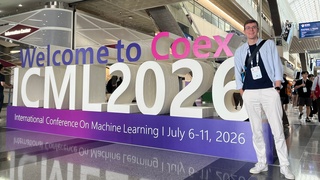
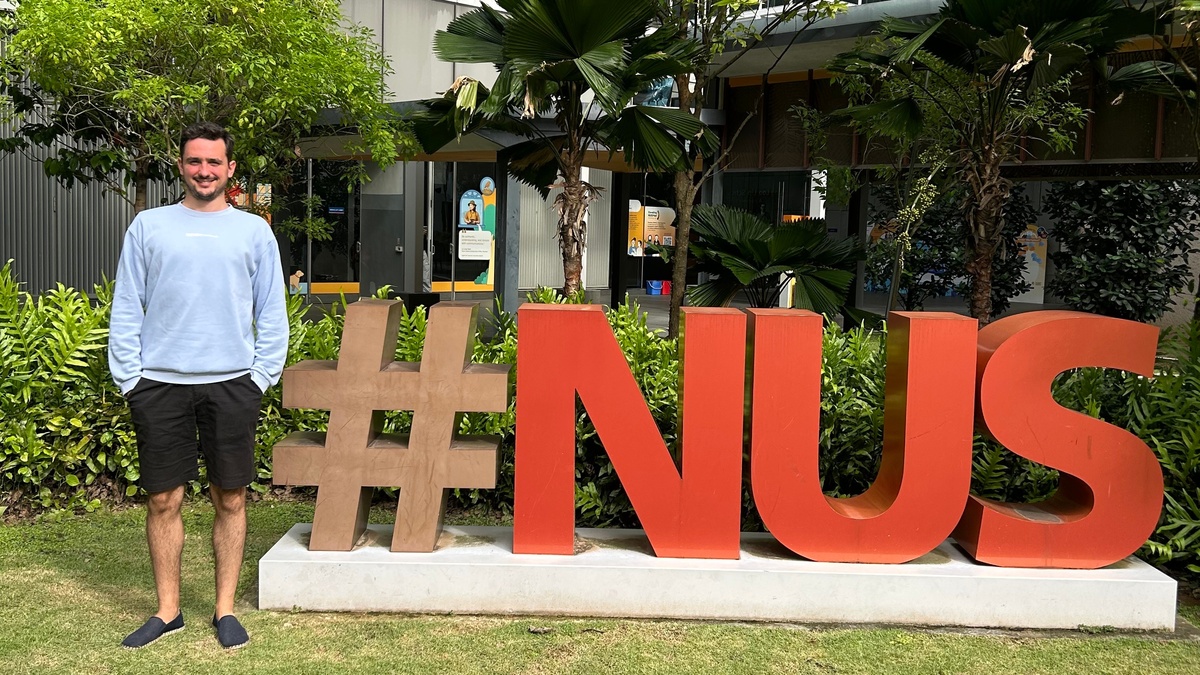
Johannes Klier at the CompBio Asia Workshop 2026 in Singapore
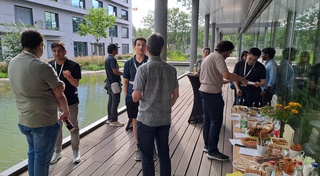
During the CompBio Asia 2026 workshop in Singapore, Johannes exchanged ideas with other scientists on protein structure prediction and protein isoforms. The workshop, led by Prof. Travis Wheeler (University of Arizona, USA), provided an ideal setting for advancing interdisciplinary collaboration between structural biology and artificial intelligence on an international level.
The workshop in Singapore went beyond traditional formats and focused on an interactive and collaborative approach. Participants immersed themselves in an intensive program that combined instruction in the key areas of artificial intelligence, molecular dynamics, and structural biology with the development of practical research projects. They benefited from direct interaction with experts, including Prof. Travis Wheeler, who was on site with part of his lab, WheelerLab, to guide the participants’ methodological work actively.
 ©
©
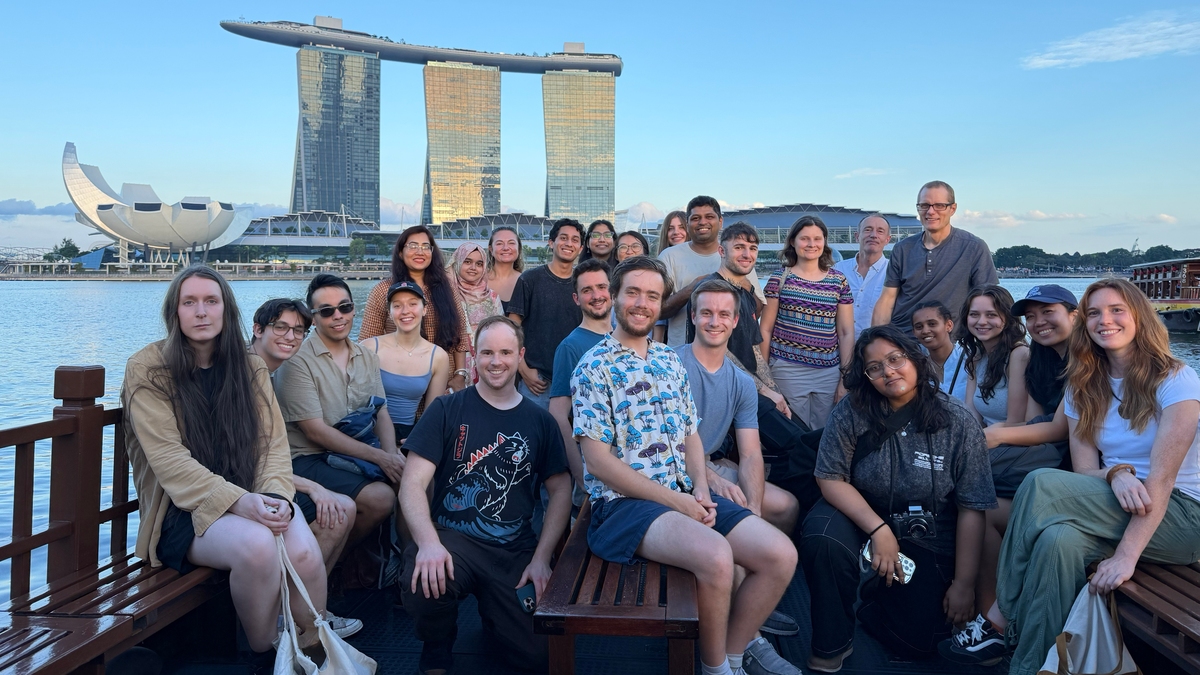
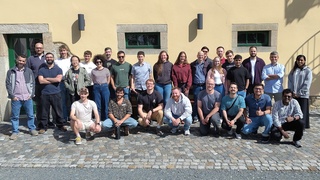
Group photo of the participants at the CompBio Asia 2026 workshop
In his research at the Institute for Drug Discovery and at Fraunhofer IZI (Institute for Cell Therapy and Immunology), Johannes Klier is investigating how sequencing data can be used, with the help of structural modeling and artificial intelligence, to predict the effectiveness of cancer therapies. He is particularly interested in predicting the 3D structures of protein isoforms, which are proteins that originate from the same gene but can vary from patient to patient. The dynamic nature of these variants poses unique challenges for prediction, an area that has received little research attention to date.
During the workshop, Johannes, along with two other participants, explored how the structure prediction of protein isoforms can be optimized through the use of various models, such as AlphaFold2 and AlphaFold3, as well as the targeted manipulation of multiple sequence alignments (MSA). MSAs are used as part of the input for these models and are usually decisive for the quality of the prediction. Since isoforms resulting from alternative splicing have sequences consisting of different combinations of exons, this distinction must be taken into account already during the creation of the MSAs. The algorithms natively used by the models are not yet capable of doing this. Johannes was supported in this effort by the expertise of WheelerLabs: the tool they developed, BATH (Better Alignments with Translated HMMER), proved useful for identifying deleted regions in isoforms and incorporating them into the creation of the MSAs.
The approaches developed during the workshop now form the basis for a planned joint publication, which Johannes will pursue in direct collaboration with Wheeler's research group.
News All News
 © Ludwig Schmutzler