January 26, 2026
Women Supporting Women in Artificial Intelligence
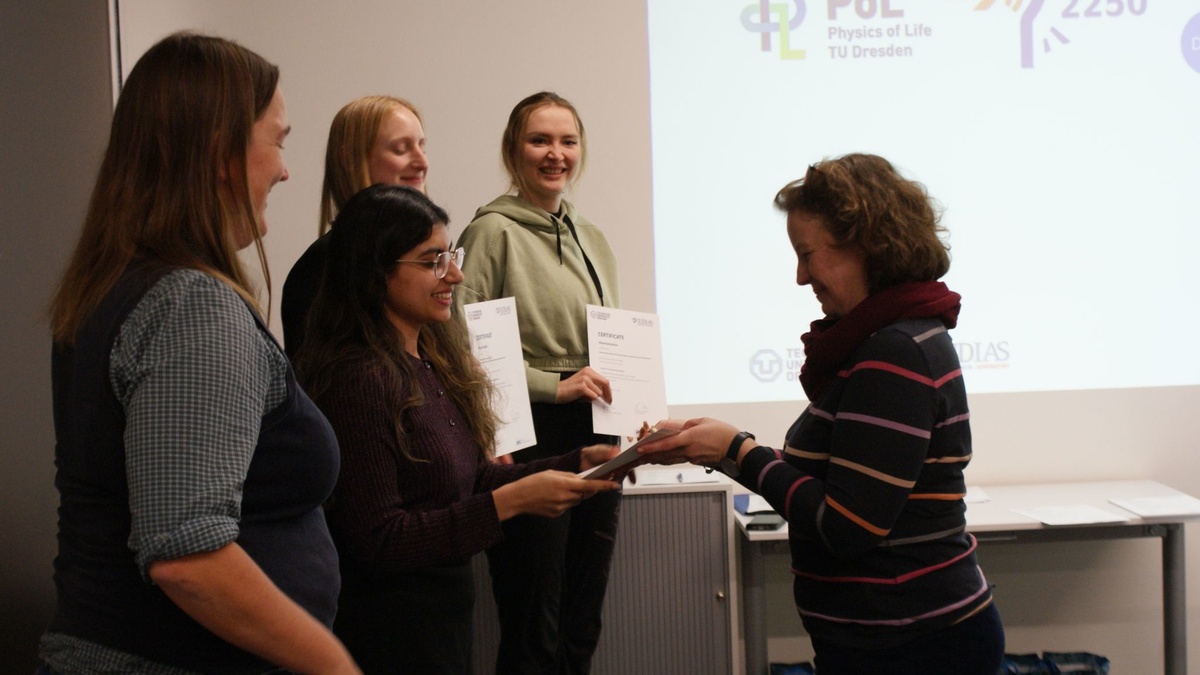
Haadia Amjad is part of the SECAI Graduate School and is currently pursuing her Ph.D. in Explainable Artificial Intelligence at the Chair of Fundamentals of Engineering. As a researcher working on the latest XAI methods, with deep industry insights, she sees the importance to support young women trying to access and build early careers around this field. As a mentor in the TU Dresden Join Science mentoring program, she guided mentees such as Israt Jahan Tulin towards a career in science. Today, they are sharing their experiences.
“I was always into computers and science. Computer science was the subject I wanted to study and work in more than anything, ever”, reflects Haadia Amjad. Her fascination with the field of computer vision began in childhood, where she recognised many opportunities to contribute to real-world applications, “but when I was growing up, I didn’t know a lot of successful women in STEM or the names of female inventors being used in conversations as much as the male inventors. Not because they weren’t there, but because they aren’t represented enough“, said Haadia. Young women in particular lack female role models in STEM subjects. Haadia therefore, knew from an early stage in her academic career that she wanted to improve young women's access to computer science and use her position to be a good example. “I believe that being part of a community comes with a social obligation to commit some of our resources to the betterment of all.” So, when SECAI presented her with the opportunity to participate in a mentorship program as a mentor, she was elated to participate.
“It's been an exciting yet daunting experience. I think the role of a mentor is one of high responsibility. So I take it very seriously and put my best foot forward for my mentees. It’s an honour to meet so many great young women,” shares Haadia. Many young talented women are daunted by the process of entering the academic world. Haadia and the other mentors, support them in making this decision and open doors for them.
“The idea is simple – a structured approach to achieving goals and resolving issues tailored in the best possible way through mutual communication and discussion. These goals fall into three categories: professional, personal, and other. Professional goals involve providing career advice and specific, skill-based discussions and support to help mentees achieve their professional goals. Personal goals involve developing interpersonal skills and having open discussions about issues that may hinder a mentee's growth and personal development. ‘Other’ goals include anything mentees want to discuss,” explains Haadia.
 ©
©
Israt Jahan Tulin
Last year, Israt Jahan Tulin participated in the program and became Haadia's mentee. At that time, she was facing her master's degree and the decision to pursue an academic career or a career in industry.
Just like Haadia, Israt has always been passionate about computer science. With two master's degrees in computer science and engineering and computational modeling and simulation, as well as experience as a lecturer and in project work, Israt had plenty to offer. She was inspired by the immense potential of machine learning to solve complex, real-world problems. However, the biggest motivation for her was the blend of creativity, mathematics, and impactful research in the field.
“My main challenge was self-doubt and a lack of confidence about making a career decisions. I often questioned whether I belonged in research or industry”, Israt shares. “Joining this program gave me access to a community of inspiring women who could share the experience and advice”. Haadia, as a mentor, addressed her challenges in the program through structured discussions and honest reflections. “Haadia, was truly inspiring. Her dedication and empathy made a huge difference for me. She patiently helped me explore both academic and industry paths and guided me in identifying what aligns best with my skills and interests,” says Israt. In addition to introducing Israt to a structured approach to achieving goals and resolving issues, Haadia connected her with researchers from different disciplines at TU Dresden and gave her the opportunity to present her research to specialist audiences, which later led to multiple job offers.
Now, Israt works at HZDR as part of the AI Consultant Team, where she focuses on tomographic data denoising and segmentation. Israt also teaches machine learning and deep learning courses and participates in conferences to present her research. “My mentor’s guidance played a critical role in shaping this path – especially by helping me find balance between research, curiosity and real-wold impact. The confidence and decision-making skills I gained during the mentoring continue to help me in professional discussions, teaching, and conference presentations”.
Are you interested in participating in the program? You can find all the information about the program and registration here.
News All News
 © Ludwig Schmutzler