 © Silicon Saxony / mio motion GmbH
June 22, 2026
SECAI joins 2,000 Experts From Around the World at the Silicon Saxony Days
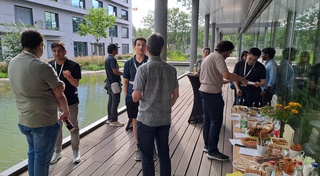
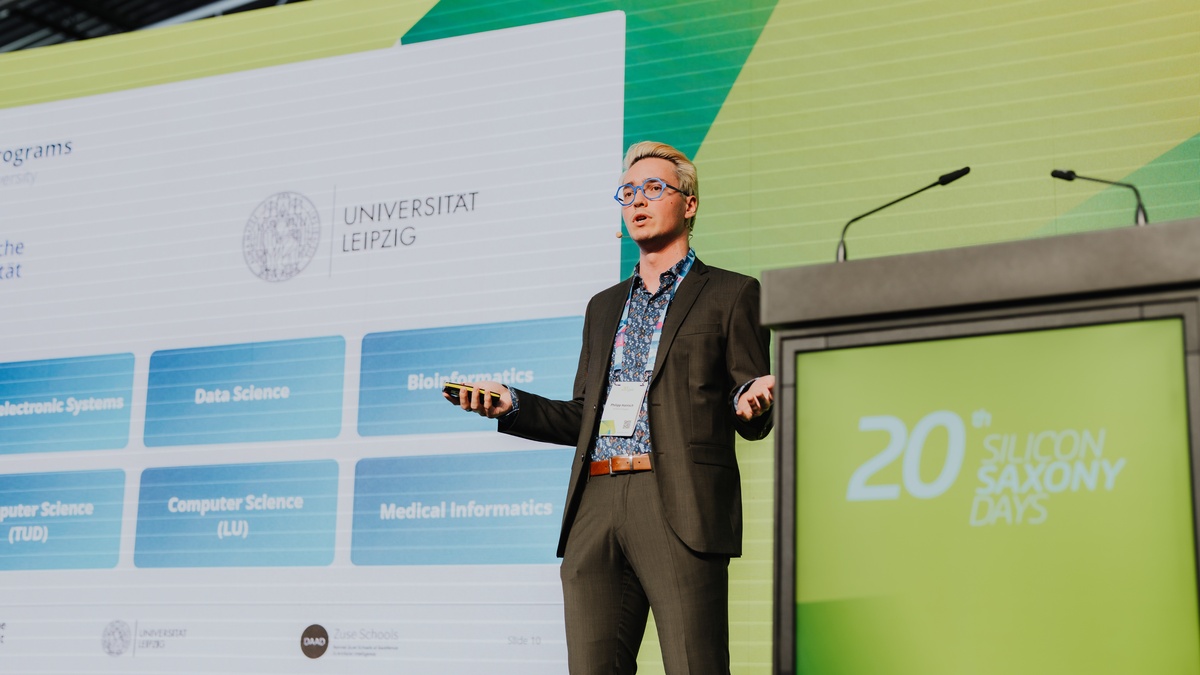
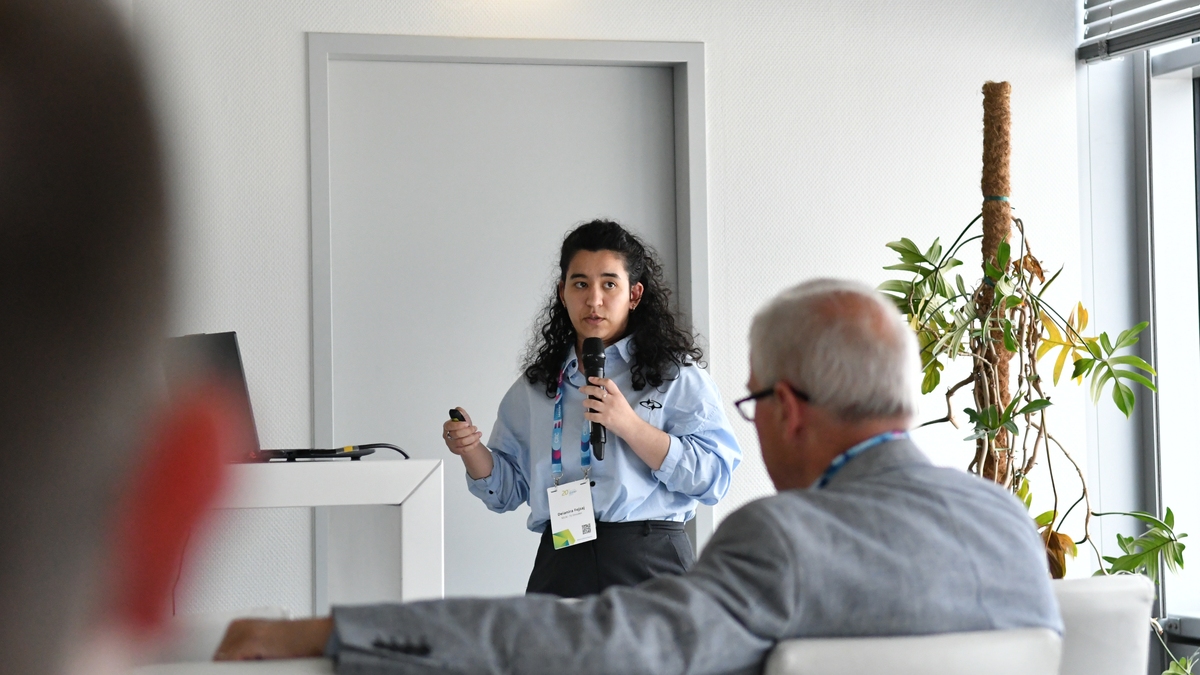
From June 15 to 17, 2026, Dresden Airport became the central hub of the European high-tech ecosystem. Over the course of three days, the Silicon Saxony Days brought together more than 2,000 experts from industry, research, startups, and politics to network, exchange perspectives, and collaborate on topics that will shape Europe’s future and strengthen Saxony as a business hub for AI. SECAI was represented at the event by speakers Philipp Hanisch, who presented how SECAI trains the next generation of AI experts, and Deianira Fejzaj, who gave a presentation on “AI applications using exfoliated-MoS2-based vertical memristors.”
The Silicon Saxony Days were opened by Saxony’s Minister President Michael Kretschmer. He welcomed the economic developments in Saxony and pledged political support. However, with representatives from the German Parliament, the European Commission, and international partnerships – particularly with Taiwan – the Silicon Saxony Days extend far beyond Saxony’s borders. International cooperation with like-minded economic nations is of the utmost importance for stabilizing supply chains and achieving a sustainable transformation. The Silicon Saxony Days therefore strengthen the global networking of key future technologies with real-world applications across the entire value chain and shape the development of the European high-tech ecosystem.
To succeed in the global AI race, recruiting and nurturing outstanding young talent plays a crucial role. SECAI, one of the DAAD Konrad Zuse Schools of Excellence in AI, is dedicated to precisely this mission. As a flagship project of the German federal government, the School supports young talent and integrates them into a close-knit interdisciplinary network of fellows, leading universities, and partners from international research institutions and companies to prepare them for careers in research and industry. In this way, SECAI contributes to training the next generation of AI experts who will advance research, innovation, and the economy in Saxony and Germany.
 ©
©
Deianira Fejzaj giving a talk at the Silicon Saxony Days 2026
SECAI PhD student Deianira Fejzaj gave a presentation on research into components that mimic biological synapses. Given the rapidly increasing demand for data in the field of AI, she sees such components as promising candidates for future neuromorphic systems. Memristors made from high-quality 2D materials are candidates for artificial synaptic components that support neuromorphic computing and mimic synaptic plasticity (potentiation, depression, spike-amplitude plasticity), particularly so-called short-term plasticity using paired-pulse facilitation. In addition, they can be trained using Pavlovian conditioning. According to Deianira, these devices have the greatest prospects for success.
News All News
 © Ludwig Schmutzler